

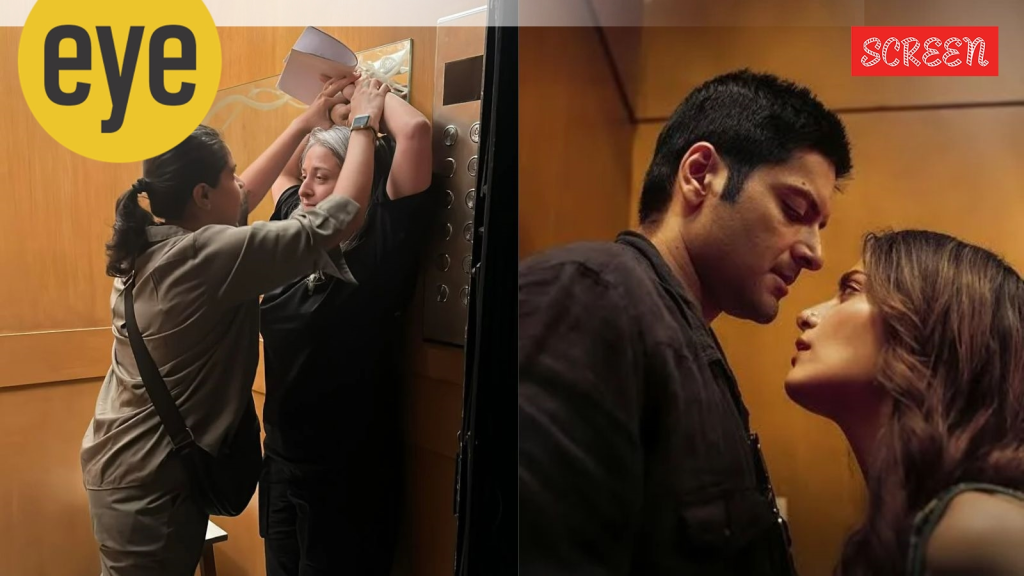



The cameras were ready, the actors were prepped, and a kiss was on the day’s shooting schedule. But when the moment arrived, both actors froze. Director Ruchir Arun, who was at the helm of the series — he prefers not to name it — found himself in an awkward spot. He did not want to push the actors into doing something they were uncomfortable with. There was no intimacy coordinator then attached to the project to guide them through the scene and they eventually dropped the kiss from the show.
Some years later, when Arun started working on Musafir Cafe, an eight-part Netflix series (2026) that explores the romantic relationship Chandar (Vikrant Massey) shares with Sudha (Vedika Pinto) and later with Preeti (Mahima Makwana), things were different. The director worked with an intimacy director— Neha Vyaso, founder of BraveSpaces India — for the first time. Long before the actors arrived on set, they participated in an intimacy workshop that helped them understand their characters, explore the chemistry between them and develop a shared language of comfort. The exercises also helped them distinguish their characters’ emotions from their own, creating a clearer boundary between the personal and the performed.
“Watching Neha work with Vikrant, Vedika and Mahima, I realised that an intimacy workshop is, in many ways, an acting workshop. It gives actors a very specific space to understand their characters, their emotional core and, most importantly, the nature of their relationship with the other character,” says Arun. He is collaborating with Vyaso again for the upcoming series Nazdeekiyan, which is loosely adapted from Karan Johar’s Kabhi Alvida Naa Kehna (2006) for Amazon Prime India, while Musafir Cafe is renewed for Season 2.

Neha Vyaso, Founder, BraveSpaces India. She worked on Musafir Cafe, Chand Mera Dil.
For decades, Indian cinema relied on suggestive imagery to convey intimacy on screen: flowers brushing against each other, two birds pecking each other, waves crashing against rocks, a blazing fire or, even, milk boiling over in a pot. As filmmakers began portraying closeness realistically, the use of such visuals waned but the discomfort around intimate scenes persisted. In the absence of formal protocols, their filming often depended on ad-hoc arrangements and informal understandings. Then came the 2017 MeToo movement that brought the conversation around to the forefront, placing consent and power dynamics on film sets under scrutiny.
The idea of intimacy coordination has its roots in live theatre, where stage combat and movement choreography helped performers navigate physically demanding scenes safely. In 2015, Alicia Rodis and Tonia Sina co-founded Intimacy Directors International (now, known as Intimacy Directors and Coordinators, or IDC) to bring structured safety protocols to film and television sets. The practice gained momentum in 2018, when HBO hired Rodis to work on the second season of The Deuce. Impressed by the results, the network made intimacy coordinators mandatory for all its productions featuring nudity or sex scenes. Soon, other major platforms, including Netflix, Hulu, Amazon and Showtime, followed suit.
Subsequently, SAG-AFTRA (Screen Actors Guild — American Federation of Television and Radio Artists) introduced guidelines for intimacy coordinators to standardise safety, consent and advocacy on professional sets. Indian production houses and streaming platforms caught up soon after. Even though the MX Player series, Mastram (2020), had roped in Canadian intimacy coordinator Amanda Cutting, the practice of having intimacy professionals grabbed attention with the release of Gehraiyaan on Amazon Prime Video in 2022.
Directed by Shakun Batra, the film with Deepika Padukone, Ananya Panday and Siddhant Chaturvedi, veers into morally grey areas as it explores love, infidelity and trauma. “Gehraiyaan was the first time I worked with a proper intimacy department. (Director-writer) Dar Gai, who is also a friend, came on as our intimacy director and helped us build the entire system for the film. Aastha (Khanna Bhardwaj), who was just finishing her training at the time (at Los Angeles-based Intimacy Professionals Association), joined us as the intimacy coordinator,” says Batra.
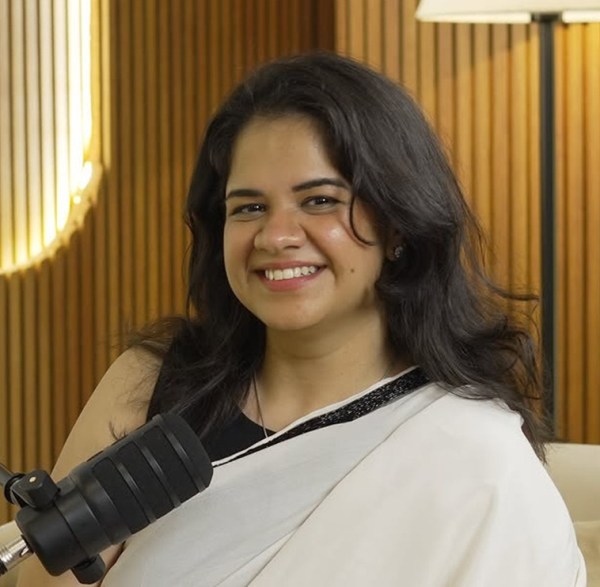
Aastha Khanna Bhardwaj, founder of The Intimacy Collective India. She also worked on Gehraiyaan, The Royals, Lust Stories 3.
While shooting the scene where Padukone’s character Alisha, and Zain (Chaturvedi) meet in a hotel room to call off their clandestine affair but end up getting intimate, only Batra, cinematographer Kaushal Shah and Khanna Bhardwaj were in the room. “Till today, this remains one of my favourite scenes that I worked on. The actors, Shakun and I discussed a certain blocking and shots. In about an hour and a half, we shot the sequence,” says Khanna Bhardwaj, founder of The Intimacy Collective India.
By the time Batra worked on his segment of the just-released Lust Stories 3, featuring Ali Fazal and Radhika Madan, the process had become more intuitive. “An intimate scene is ultimately still a scene. The intimacy coordinator allows us to choreograph the physical part clearly, so the actors can focus on what the scene is actually about and are free to perform the emotion,” he says. In this segment titled, We Can’t Get Enough, though the lead characters are heading for divorce they are still physically attracted to each other.
Batra believes that having intimacy professionals removes the ambiguity. “Boundaries, movements, clothing, nature of touch — all of that could be discussed beforehand,” says the writer-director.
Intimacy coordinators usually receive specialised training in consent, movement choreography, and set guidelines from international bodies such as Intimacy Professionals Association and Intimacy Directors and Coordinators (IDC). In India, The Intimacy Lab and BraveSpaces Creative India offer training programmes that come handy on sets.
The first time Radhika Apte worked with an intimacy coordinator was on the sets of Sister Midnight (2024). “Radhika told me, humorously, that she had performed so many intimate scenes but had never had an intimacy coordinator,” shares Ankita Podder, who is associated with Bad Girl (2025), Mirzapur: The Movie and the upcoming Naagzilla. “During scenes involving nudity, I try to ensure that the set remains closed, appropriate modesty garments and barriers are in place and hygiene checks are carried out,” she says. In scenes that show nudity, actors use modesty garments such as nipple stickers, strapless thongs and athletic cups.

Ankita Podder is the intimacy coordinator for Bad Girl (2025), Mirzapur: The Movie and the upcoming Naagzilla.
Despite all preparations, sometimes an actor will still opt out. “If it’s a hard no, I don’t push it. But for instance, it’s a simulated sex scene and the actor does not want to show their lower body parts, then, we work around it,” says Podder, and adds the intent of the scene matters to her.
For Khanna Bhardwaj, her responsibility as an intimacy professional extends beyond ensuring the consent of actors. “We are not an extension of HR (human resources),” she clarifies. Drawing parallels with action directors, she argues that they are not brought on merely to prevent injuries but to choreograph a sequence. “The safety aspect of an intimate professional’s job shouldn’t overshadow the creative gaze. I work closely with directors and choreograph the intimate scenes,” says Khanna Bhardwaj, who has worked on projects such as Class (2023), Saas, Bahu Aur Flamingo (2023), Murder Mubarak (2024) and Ziddi Girls (2025).
Ideally, an intimacy coordinator’s work begins well before the cameras roll. Vyaso says, “As I go through the script, I mark scenes that are high on choreography or physical movement or exposure in purple. Those scenes need my presence on set. The scenes that explore the chemistry between the actors, I mark them yellow. For Musafir Cafe and Chand Mera Dil, a lot of focus was on building the chemistry between the actors.” Vyaso held a five-day workshop with Chand Mera Dil actors Ananya Panday and Lakshya before its filming.
Even after all the preparations, challenges can come up unexpectedly. Vyaso remembers how once an actor froze in the proximity of her co-actor. Reason: The strong perfume the co-star was wearing. Psychological counsellor and intimacy coordinator Parinaz Aga recounts how an advertisement shoot ran into trouble when one of the models refused to perform a particular shot. “Once someone says no, I don’t try convincing them,” recalls Aga, who instead found another model.

Psychological counsellor and intimacy coordinator Parinaz Aga, whose recent project include Lust Stories 3.
An intimacy professional’s work can also extend to reading between the lines. “Sometimes the script is not descriptive enough. For instance, in a crucial scene, there’s one line saying: ‘They go for it’. You can interpret that line in so many ways,” says Aga, whose recent project includes Lust Stories 3. She, however, believes an intimacy coordinator brought on early can help explain what the scene aims to capture.
Intimacy coordination, however, is not a one-size-fits-all exercise and the coordinator needs to understand when to step in and when to give space. Khanna Bhardwaj recalls working with Ishaan Khatter on The Royals (2025). While the actor appreciated the support during workshops, he preferred less intervention and direct communication with the director on the sets.
For producer Rangita Pritish Nandy, who has worked with intimacy coordinators since Four More Shots Please! Season 2 (2020), the distinction between storytelling and provocation is important. “Intimacy on screen is often misread as provocation when it’s actually storytelling. An intimacy director helps you keep it organic,” says Nandy, president and creative director, PNC Media and Entertainment Limited.
Since Four More Shots Please! tells stories about “women with agency over their own bodies and choices”, Nandy took steps to ensure that the actors could “own those moments” without feeling unsafe. “Safety is non-negotiable… How we showcase intimacy, whether it supports the story, whether the actors feel safe isn’t a checkbox; it’s an ongoing conversation that starts at the script stage and continues through shooting and editing.”
Podder believes in “realistic representation” of intimacy on screen, away from the popular mushy depictions of love. “For long the representation of intimacy was determined by the male gaze. You rarely saw large-bodied people experiencing intimacy on screen, or older people sharing intimate moments. Deepa Mehta’s Fire (1996), for instance, was a landmark movie that changed the conversation,” says Podder.
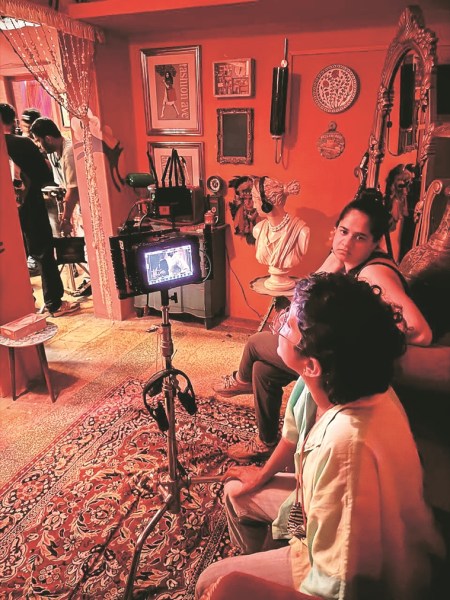
Aastha Khanna Bhardwaj with director Kiran Rao choreographing a scene in Lust Stories 3.
Not every actor welcomes an intimacy coordinator on set. Gwyneth Paltrow, for instance, has spoken of feeling “stifled” by an intimacy coordinator’s presence while shooting Marty Supreme (2025), while Mikey Madison chose not to work with one on Anora (2024), which won her the Academy Award for Best Actress. These instances raise the question: can a practice designed to protect performers interfere with their creative process? Batra believes the process followed by actors varies. “If somebody feels that a particular method interferes with their performance, that experience is valid. The goal isn’t to put more rules between two actors. It’s to make sure nobody has to cross a personal boundary in order to make a good scene,” he says.
But a safe and comfortable set is not just a concern for actors and directors. Cinematographer Pooja Gupte recalls shooting one such scene around 2014, when she had to constantly keep in mind that the actress was uncomfortable being filmed below the waist. Arun, meanwhile, hopes to dispel the notion that intimacy coordinators are needed only for sexual or romantic scenes. “It would be more constructive to think of an intimacy workshop as part of an actor’s preparation to embody a character.” After all, consent can make room for creativity.
Source - Indian Express